 English
 Hrvatski

AmCham Talents - Understanding Team Dynamics
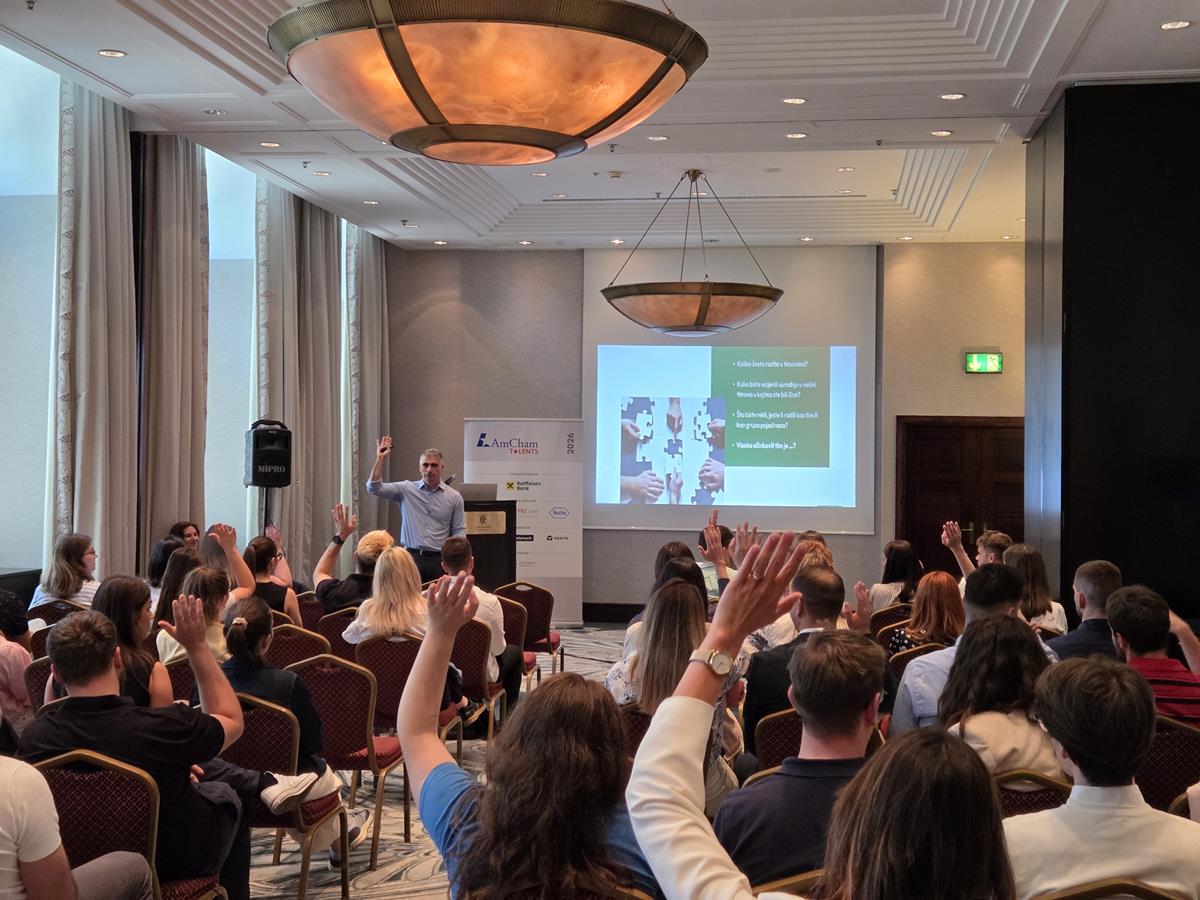
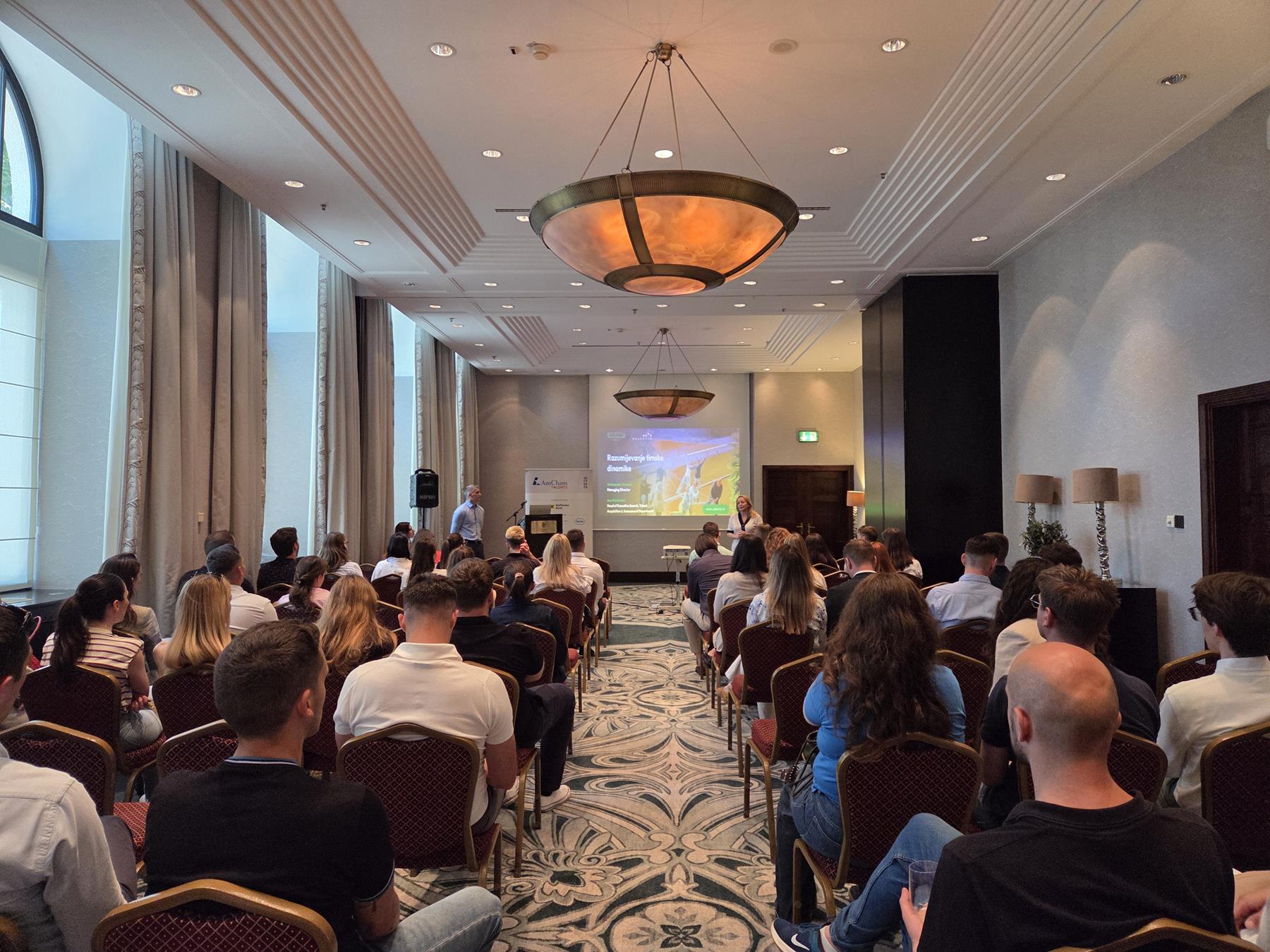
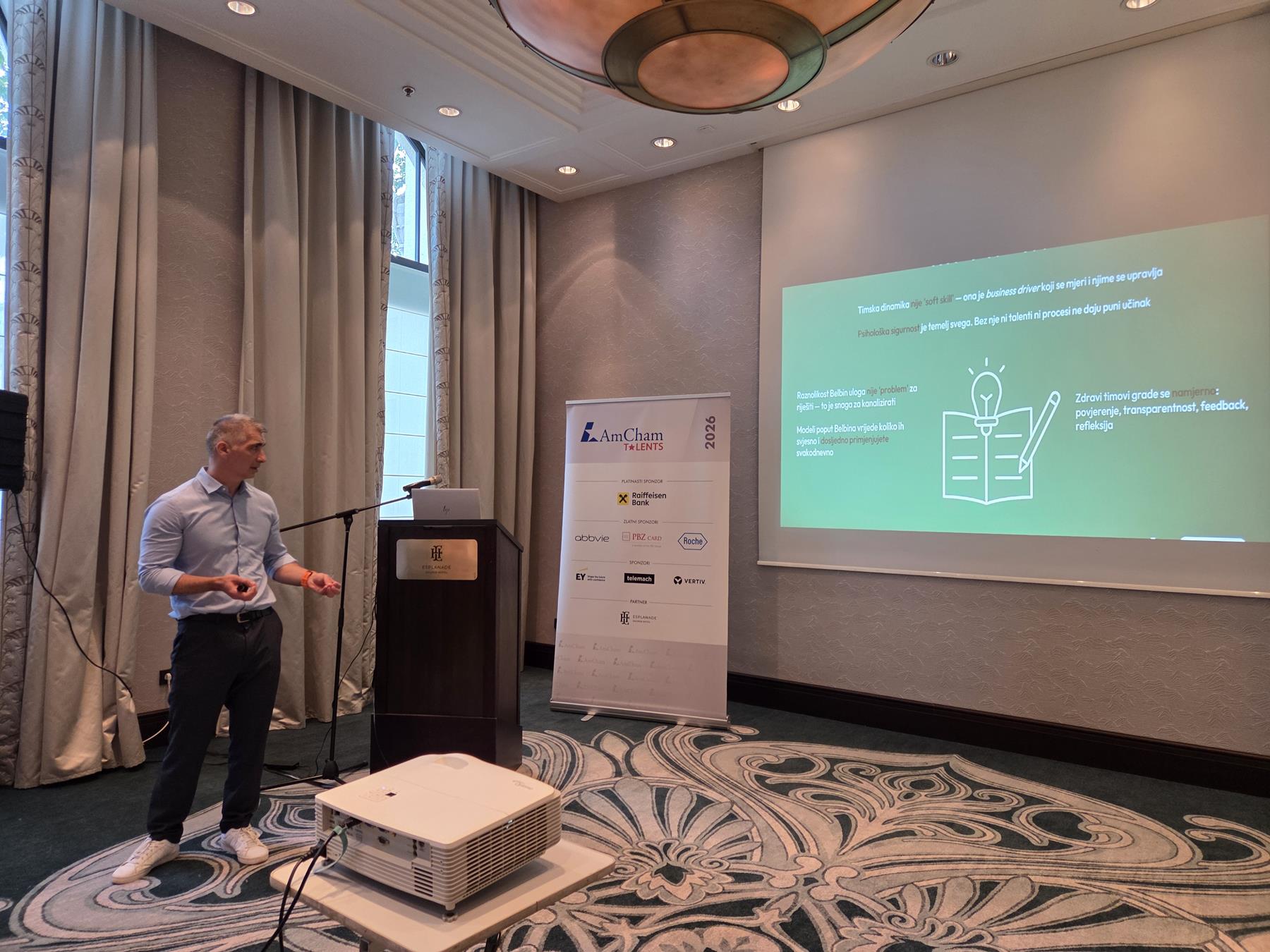
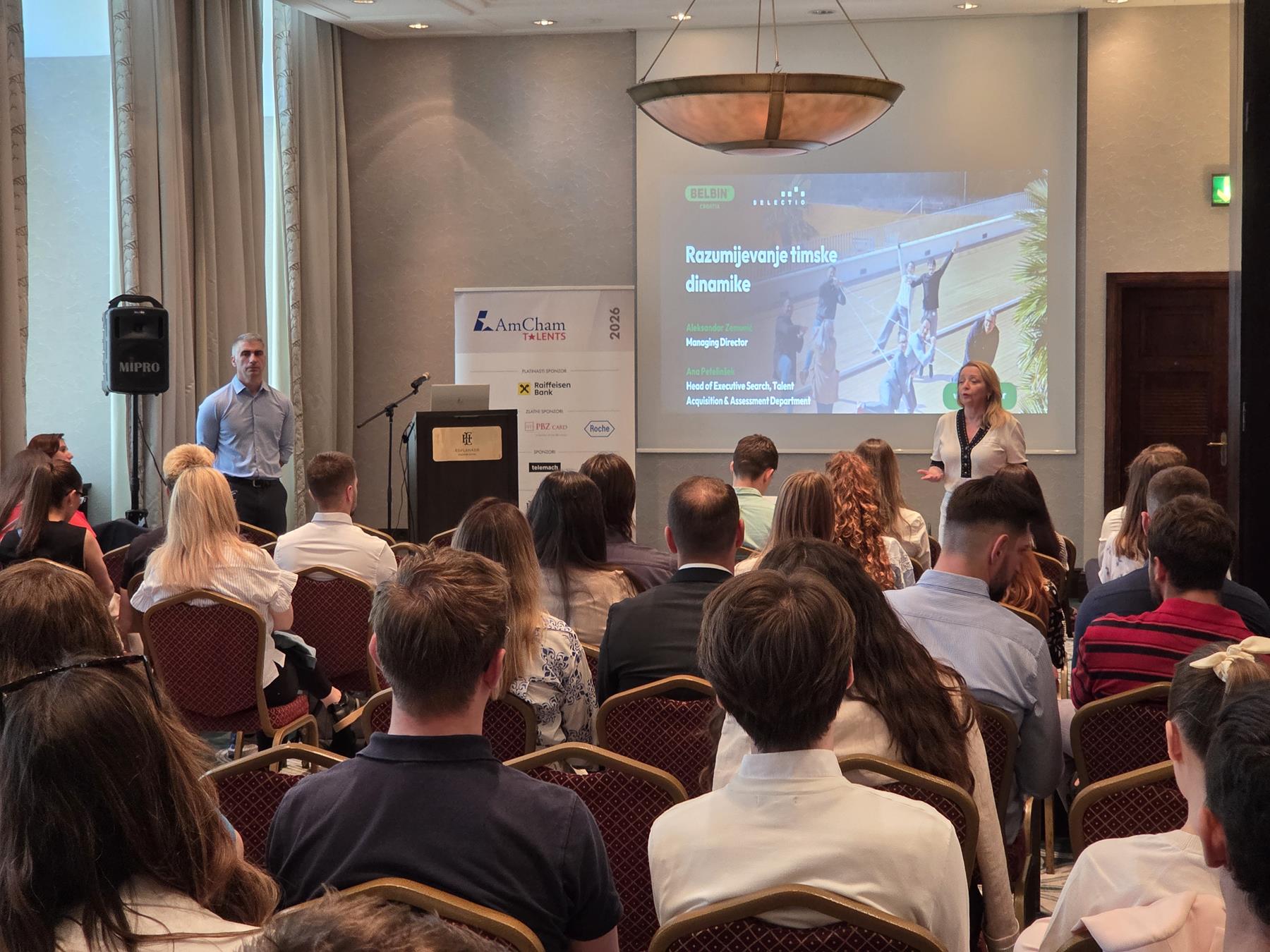
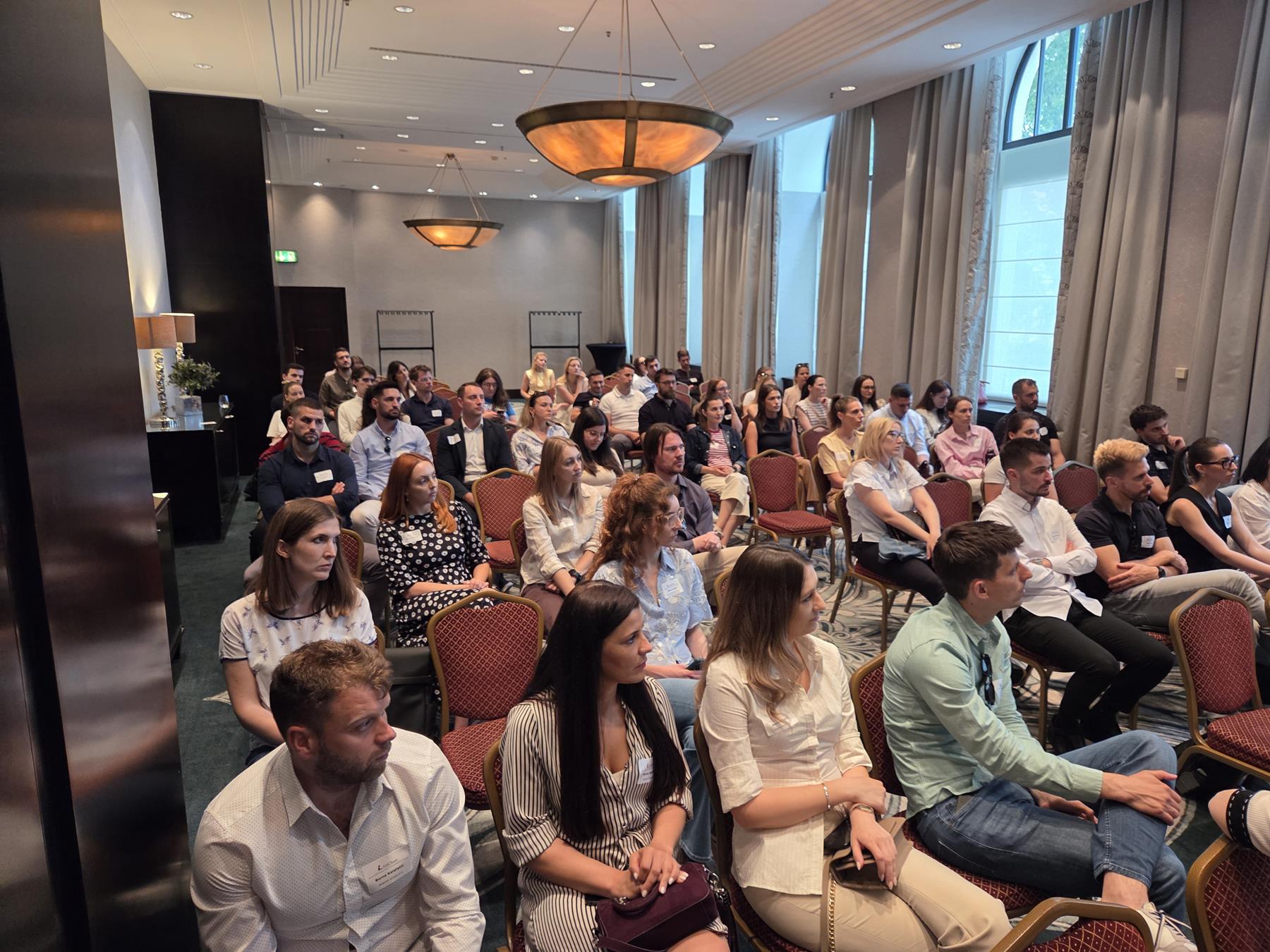
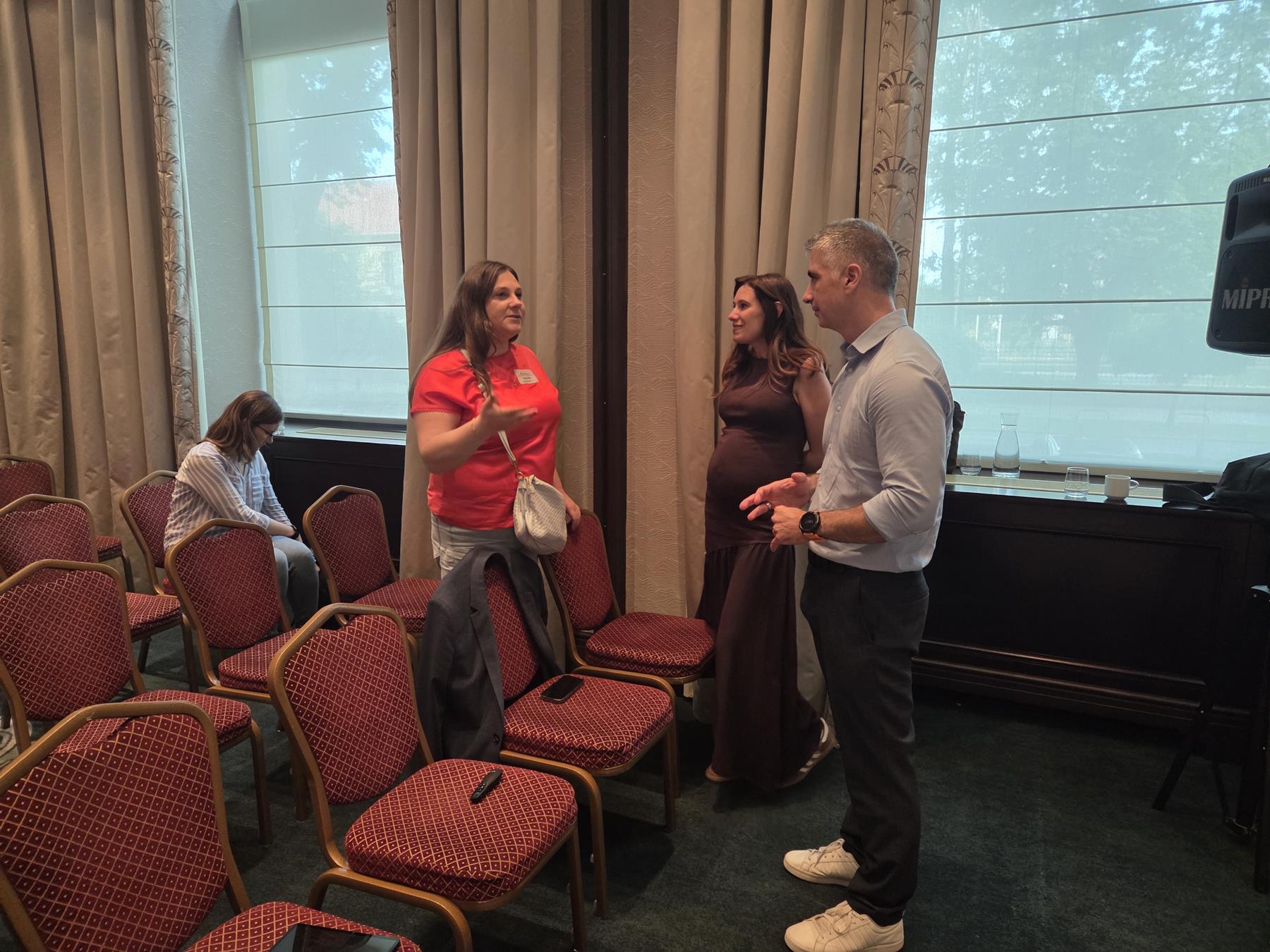
As part of the AmCham Talents 2026 program, the fourth lecture of this year’s cycle was held with Aleksandar Zemunić, Managing Partner of SELECTIO Group, who introduced participants to the topic of team dynamics, collaboration, and the role of different behavioral styles in team effectiveness.
The lecture opened a topic that is highly relevant for young professionals and future leaders: why some teams perform better than others, what distinguishes a true team from a group of people gathered around the same task, and how stronger collaboration is built intentionally rather than by chance. Participants were invited to reflect not only on their own experiences of working in teams, but also on the factors that most often support - or hinder - collective performance in practice.
Throughout the lecture, it was emphasized that team success depends not only on the expertise of individuals, but also on psychological safety, clarity of roles, a shared sense of purpose, mutual reliability, and a feeling of impact. Speaking about the factors that shape team effectiveness, Aleksandar Zemunić also addressed common patterns that tend to slow teams down: from fear of conflict and lack of commitment to avoidance of accountability and inattention to results.
A particular focus was placed on the Belbin team roles methodology, which shows that successful teams are not made up of “all-rounders,” but of people whose strengths complement one another. In this part of the lecture, Ana Petelinšek, Head of Executive Search, Talent Acquisition & Assessment at SELECTIO Group, also contributed practical insights and examples from her work with organizations. Participants were thus introduced to different team roles and their strengths, as well as to the idea that diversity in behavioral styles can be a major source of effectiveness - but also of tension, if not managed consciously and consistently.
The lecture also raised a number of very practical questions: what happens when team members are too similar, how to avoid groupthink, how to create stronger structures for discussion and decision-making, and how leaders can build a healthier team context. Through examples from practice, the speakers showed how understanding team roles can support organizations in employee development, team design, coaching, mediation, and stronger collaboration.
One of the key messages of the lecture was that team dynamics is not a “soft” topic sitting at the margins of business, but a very real business factor that can - and should - be managed intentionally. Healthy teams, as was emphasized, do not emerge spontaneously; they are built through trust, transparency, feedback, and reflection.
For the participants of the AmCham Talents program, this was another valuable session that demonstrated in a highly practical way that leadership development is not only about making decisions and driving change, but also about understanding the people through whom those results are achieved.
SHARE


SHARE