 English
 Hrvatski

The Psychology of Sleep and Habits for Better Business Results
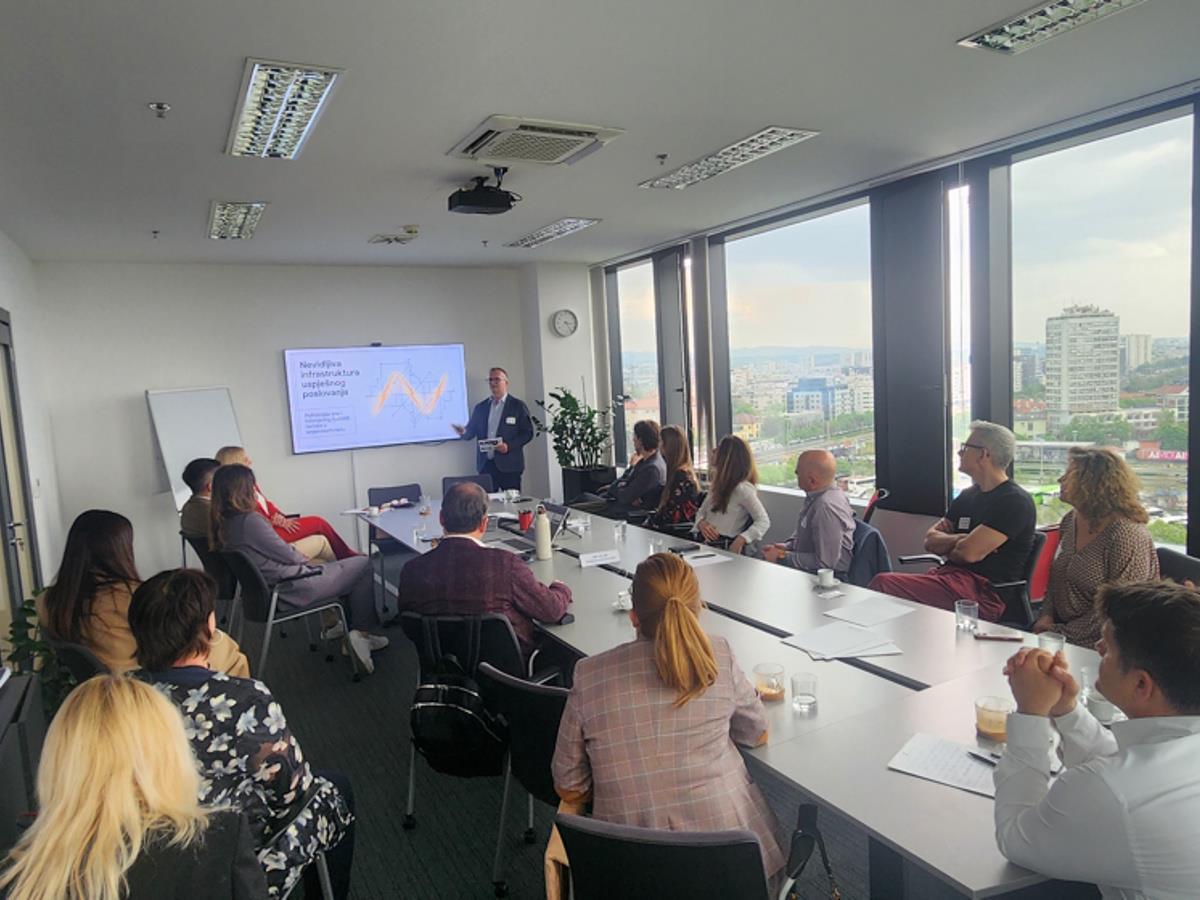
This seminar was an invitation to change—not radical change, but sustainable change that began with understanding one’s own mind and body. Chronic sleep deprivation and poor habits were shown to spill directly into business outcomes: weaker concentration, more mistakes, lower energy and motivation, and, over time, higher stress and an increased risk of burnout. In a fast-paced work environment, sleep and habits were highlighted as a core driver of productivity—essential for clear decision-making, consistent performance, and healthy workplace relationships.
The seminar provided a practical psychological framework for realistic, sustainable changes. Participants gained clarity on:
- what healthy habits are and how they are formed
- key principles of habit psychology (what truly drives behavior)
- psychological barriers to change—and how to overcome them
- the role of environment and workplace culture in sustaining (or sabotaging) habits
- what sleep reveals about workload, stress, and functioning
- biological rhythms and cycles (how to work with your energy, not against it)
Special emphasis was placed on stress and its connection to sleep, as well as on the distractors—screens, an “always-on” culture, late-night work, and mental rumination—that most often undermined the quality of rest.
Through practical tips and a guided exercise, participants learned techniques to calm the mind and “switch off” the stress response more quickly. The seminar covered:
- which habits most improve sleep quality and daily performance
- the role of mental hygiene (post-work reset, boundaries, recovery)
- the power of micro-habits in everyday change (small, but consistent)
A real-world example from air traffic control was also presented to illustrate the importance of sleep in high-responsibility professions, where focus and stress resilience are critical to safety and success.
The seminar included an interactive segment—a 5-minute self-assessment—with a short questionnaire on:
- sleep habits
- phone use
- relaxation time
The closing section emphasized:
- setting realistic and achievable goals
- the importance of support within the work environment and team culture
The seminar was led by Iva Brozičević Dragičević, MSc, Professor of Psychology and Head of the Healthy Lifestyle Program at Terme Selce, and Željko Oreški, MEng (Traffic Engineering), MRAeS, an air traffic controller and shift supervisor at Croatia Control (Zagreb), and a lecturer in the scientific area of engineering sciences, within the field of traffic and transport technology at the Faculty of Transport and Traffic Sciences.
Iva Brozičević Dragičević, MSc, psychologist, has over 25 years of experience working with managers, athletes, and diverse age groups. She is a Management Board member of Poliklinika Terme (Selce and Rijeka), Director of Terme-Selce d.o.o. for health tourism, and CEO of the Healthy Living by IBD program. She created wellbeing programs focused on developing healthy habits, personal resilience, and business performance, as well as disease prevention. She co-created a program for air traffic controllers (with Vlasta Brozičević, MD), and since 2018 has led the innovative Junior Camp for children and adolescents with obesity. She lectures at international conferences and congresses, has been actively involved in four Olympic Games, and has received multiple awards, including the Croatian National Tourist Board recognition “Person—Key to Success” as Employee of the Year 2025 in the health tourism category. She completed her psychology degree and master’s studies in the USA and further trained through the Leadership in Medicine program at Harvard Medical School.
Željko Oreški, MEng (Traffic Engineering), MRAeS, is an air traffic controller and shift supervisor at Croatia Control (Zagreb), with over 30 years of experience in operational environments. He is President of the Croatian Air Traffic Controllers Association (HUKL) and focuses professionally on Human Factors, fatigue and stress management, and the impact of shift work on circadian rhythms. He has been a certified Human Factors specialist since 2017, is a board member of the European Association for Aviation Psychology (EAAP), and a member of IFATCA’s Mental Wellbeing Task Force. He also works as an instructor and assessor in air traffic controller training and serves as a lecturer at the Faculty of Transport and Traffic Sciences.
Program:
- 14:00 – 14:15 Registration and welcome drink
- 14:15 – 15:15 Presentation
- 15:15 – 16:00 Questions and answers, discussion
SHARE


SHARE